

meditation
-
Do I have to sit in lotus position while meditating?
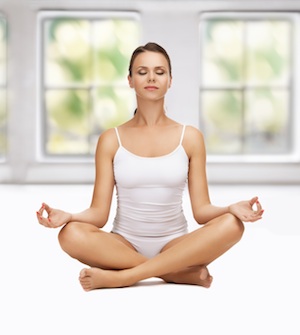
 It is not necessary to sit in the lotus position to meditate. The important thing to remember when you are meditating is to keep your spine erect and straight. It is also important to be in a position that is comfortable for you and that you can maintain for the duration of the meditation session. This could mean that you meditate while sitting in a chair, kneeling or doing other sitting postures such as the burmese pose. Laying down is also a method, however, many people have a tendency to fall asleep while doing this pose.
Remember, meditation is defined as focus to the extent that all other stimuli diminish from your perception. This means that you could be meditating while walking or doing some other form of exercise. Dynamic qigong or tai chi are supreme examples of meditating while in motion.
Although the lotus posture is the most stable sitting position, it is also the most challenging. If you are having a difficult time getting into this position or maintaining this position, you may want to consider asking yourself some questions:
- Are there more important goals to focus on then getting into the lotus position?
- Can you find another position that is more comfortable for you such as kneeling or sitting in a chair?
-
How do I deal with a healing crisis?
 What do you do when you start the meditation for anxiety and stress process and start to release "energies"(emotional and/or physical) faster than you have the time to adjust? Well this is known as a healing crisis. When a healing crisis occurs, you have several options:
- Do more of what you are doing in order to move the "energy", which can manifest itself emotionally and/or physically. For instance, your daily qigong practice of 20 minutes may have "released" an old emotional wound you had carrying around for many years. When it gets "released" it is causing you stomaches, in addition to memories of this emotional situation. In order to "move this energy", you may want to practice your qigong for a longer period (40 minutes) until you start to feel better.
- Slow down what you are doing. Slow down your routine so that you are able to deal with the emotions and/or physical symptoms that you are dealing with at that time. For instance, you may decide to do 10 minutes a day instead of 20 minutes.
- Get help from someone who can help you deal with the emotional and/or physical symptoms you are experiencing. For instance, you may want to see an alternative practitioner to help you in your moment of crisis such as an herbalist or someone who specializes in homeopathy. They may be able to give you an herbal or homeopathic remedy to assist you in moving the energy. An acupuncturist, reiki ractitioner or massage therapist are also good at helping one to "move energy" through the body. I have only listed alternative practitioners but there are also other options.
- Suppress the symptoms. If you become scared or just are not ready to deal with the situation, of course, stopping what you are doing is an option.
I have only mentioned a few options, however, there are definitely other options that you can do. Despite this, I hope that I have been able to give you some guidance on your options. Please feel free to comment or to ask any questions.
Related articles:
-
How do I meditate?
 How do I meditate? This is one of the most frequent questions that I am asked and also the most challenging. While it may seem simple to be able to just give you instructions on how to meditate, I feel that if you really want to incorporate meditation into your life, then there are some important aspects you may want to consider.
Meditation is beneficial for so many aspects of our lives. It can help to improve your physical health, it can relieve you of stress and anxiety, it can help improve your mood, and so much more. With all that meditation can do for you mentally, emotionally, physically and spiritually, it is my belief that meditation should be a part of everyone's daily routine. If everyone were to meditate on a regular basis, the world would be a much more peaceful place. The results of meditation will be different for everyone, depending on your goals, but it will change everyone for the better.
If you would like to just get to the real nitty gritty about how to meditate, click on the titles below:
Consider these topics before starting
What type of Meditation should I do?
 If you are really going to be serious about incorporating meditation into your life, you should first consider what type of meditation you would like to do. There are many forms of meditation and you may have to try different forms in order to find the one that resonates with you.
 I teach mindfulness and qigong so I can only personally speak to these practices. In the Meditation for Health Program, I use both mindfulness and qigong because I find them to be complimentary styles. The ancient energy medicine system of Qigong has many aspects of mindfulness meditation, although not traditionally looked at in this way. It can be correlated to mindfulness because as you exercise, you become consciously aware of the interplay of your movement, breath and your thoughts. You also learn to release your thoughts without judgment during Qigong practice. Qigong, is more than just a simple set of exercises, it incorporates the mind and breath. When you incorporate the mind and breath, you bring your awareness inward and you learn to do it in a mindful way. Again, while not traditionally defined as a mindfulness meditation, Qigong practice has many mindfulness aspects to it.
I like mindfulness because of the easy transition from doing the formal meditation practice and bringing mindfulness into your daily routine. When you are mindful, you are consciously aware of the moment, in a non-reactive, non-judgmental and open-hearted way. This is beneficial because it allows for the "disconnect" between the "true you" and your thoughts. You begin to be aware that you are more than your thoughts. This has profound effects on your healing on all levels. Keep in mind though, that other forms of meditation will also do the same.
I like qigong, because it is an entire system of healing. It is an ancient Chinese health system of healing and energy medicine. It has many aspects of mindfulness, which makes it very complimentary. I also like the ebb and flow of the moving qigong meditations that I do. When you do the moving meditations, you can feel the energy within you and the energy of the universe. It is a great sensation and reminds you that we are all connected and are all energy.
Set a goal
Before I start teaching someone how to meditate in my Meditation for Health Program, I first have the students set their goals. In order to be successful at anything, including self-healing with meditation, it is important to define your goals. A clear goal is an instruction for your mind to attract the situations, people and resources that align with your highest vision. It removes ambiguity from your awareness and makes sure that what you get is what you really want. Confusion breeds inaction. Placing your attention on a specific target allows you to affirm and visualize your success, and block out unnecessary interference.
Meditation Preparation
Again, keeping along the line of preparing for a continued meditation practice, it is essential to prepare for meditation. Consider the room your are going to use. Is it in a quiet place where you can meditate for your allotted time in peace? How does the room make you feel? Is it comfortable? Do you need to open windows, add plants, change the wall color, etc. in order to make it a more inviting place?
Do you have the appropriate meditation supplies? I like to meditate with a meditation cushion. It makes it more comfortable to sit during meditation. I use a zafu and zabuton but there are other supplies that you could use.
Preparing & Coping with Self-healing with Meditation
When you start to meditate, you start to release a lot of emotional energies. It is important to be able to recognize this. Some people can easily recognize when they are releasing and shifting, while others need more guidance in how to deal with these situations. In my program, we explore these topics and you are guided on the tools to use to help you in dealing with old emotional energies that are resurfacing.
Quick Glimpse
Want to start defining your goals and preparing to meditate? Then try the Meditation for Health Program for 7 days. You get access to most chapter of the online course material, if you sign up for the self-guided or 10 week course. You will get to explore defining your goals, preparing to meditate, self-healing and more. Even if you choose not to join the program, at least you get a chance to explore and consider some serious questions you should ask before beginning a serious meditation practice.
How to do Mindfulness & Qigong
-
How do I prevent myself from falling asleep during meditation
If you are falling asleep during meditation, then there are several things you can do to prevent it. Below are a list of ideas to try that should help you meditate properly:
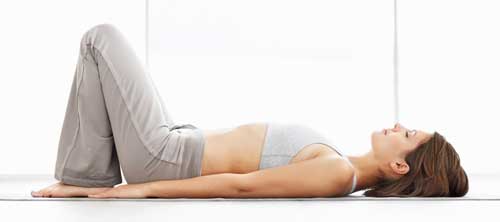
- What type of position are you doing? Chances are you are in a position that lends itself to falling asleep. For instance, the corpse pose (lying on your back) is a perfect example. Try meditating in a sitting position like the burmeseor half-lotuspose. If you must lie on your back, then modify it to reduce your chances of falling asleep. For instance, you can bend your legs at the knees.
- What time of day are you meditating? If you are meditating late at night, try meditating earlier when you have more energy.
- Have you eaten before meditation? If you have eaten a big meal before meditating then it is a good idea to wait a couple of hours before beginning a meditation session. After eating your body goes into parasympathetic mode. This means most of your energy is being put into digesting your food and it is wise to let your body focus on this task.
- Are you tired? Are you tired before you begin the meditation session. Make sure you feel well rested before you begin a meditation session. This is also related to point 2 above. If you can only meditate at night, then try a guided sleep meditation. This will improve the quality of your sleep and help you feel more well rested.
- What is the temperature in the room? A hot room lends itself to a person falling asleep.
- Are you getting enough sleep at night? Sleep is important to the health of your body (mental/emotional and physical). Make sure you are getting enough sleep at night. This along with meditation will benefit you tremendously. As stated in point 4, you may want to try a guided sleep meditation to help improve the quality of your sleep.
- What type of position are you doing? Chances are you are in a position that lends itself to falling asleep. For instance, the corpse pose (lying on your back) is a perfect example. Try meditating in a sitting position like the burmeseor half-lotuspose. If you must lie on your back, then modify it to reduce your chances of falling asleep. For instance, you can bend your legs at the knees.
-
How to do mindfulness meditation
 Mindfulness meditation is an excellent way to relieve stress and anxiety. When you are mindful, you are focused on the present moment and on what is happening now. Stress and anxiety are usually a result of thoughts about what is going to happen or thoughts about the past, not actually what is happening in the present moment. The entire stress response caused by stress and anxiety is a result of your thoughts about it. In this mindfulness meditation, we will focus on using the breath to stay in the present moment.
 This is an opportunity for you to be with whatever your experience is from moment to moment. There is no judgement, only a simple observation of the present moment and sensations of your breath. When or if you find your mind wandering, acknowledge it without judgement and return your focus to your breathing.
Instructions
Get into a comfortable meditation position, such as a sitting in a chair, cross-legged or even lying down. or kneeling position. Whatever position you decide upon, make sure your back is relaxed and erect. You want to make it easy for the energy/breaths to freely flow through your body during your meditation practice.
Become aware of the sensations of breathing. We are simply observing the breath so there is no need to change your rate of breathing, however, if that occurs that is okay. Notice the sensations of the breath as the air enters and leaves your nostrils, or passing through the back of your throat, or feel your chest or belly rising and falling. Do this with a sense of gentle curiosity. When you have found a place where you can feel your breath in comfortable manner, then try to keep your attention in that area. For an untrained mind, it is normal for your mind to wander. If your mind wanders to other thoughts, that is okay. As soon as you notice that your mind has wondered off, you are actually back in the present moment. Simply become aware of what you were thinking, gently label it as thinking, without judging yourself, then guide your attention back to feeling your breath. Each time you notice, all you need to do is bring it back. We are practicing a gentle training of the brain to remain in the present moment.
Guided Meditation
The following is a guided mindfulness meditation, which may make it easier for you to practice the meditation.
Click here to purchase guided meditation for $1.09
-
What are the Benefits of Meditation?

Meditation is usually thought of as a spiritual practice, however, meditation is very beneficial for health. Meditation can be used to improve physical, mental/emotional and spiritual health. It is natural healing at it's best. When you meditate, you tap into your own innate ability to heal. The ability to heal oneself is natural to all of us.
 When you meditate, you lower the resistance to the natural energy flow in the body and thereby raise your vibration. We are all energetic beings (E=mc2) and our normal healthy state vibrates at a high frequency. If there is a blockage of the natural energy flow, then we vibrate at a level that is lower than our normal high vibrating state. When this occurs, disharmony occurs. The extent of the disharmony is proportional to the degree of the blockage. In simple terms, if there is a major disharmony in the body such as with a major disease, then there is a major blockage of energy flow. With meditation you can begin the process of removing the blockages.
Meditation is a processes of letting go of thoughts that do not serve you. It is also a process of becoming aware of the thoughts you have in your head without judgment. Your thoughts affect your health, plan and simple. It is not until you become aware of these thoughts that you will be able to bring about healing to yourself. You must learn to let go and release the thoughts. This is a process that requires time and commitment.
The most beautiful aspect of meditation is that it is complimentary to any form of treatment. Use it in conjunction with other traditional or alternative treatment programs. It matters not because the ability to heal, lies within you. Seek within and you shall heal tremendously.
-
What can I expect as I meditate and practice qigong?
 Well everyone is different and as such their experiences will be different. Most people feel an immediate sense of relaxation. This is due to many things, one of which is a quieting of the mind. Many also begin to notice areas in their body they have never noticed before such as a particular tension* in an area. This is due to a placing of your focus inwardly. You are now beginning to notice areas of your body that have decreased energy flow and need to be opened. In a similar line of discussion, you may also notice you develop certain physical symptoms* such as a cold. With continued meditation and qigong practice, many people will also encounter a resurgence of old emotional* experiences.
 The physical and emotional symptoms are signs that a healing process is occurring. Your body is “purging” and releasing “old lower vibrating energies”. Your meditation and qigong sessions will “trigger” a form of cleansing as your energy system must adjust to a higher level of vibration. If there are any blockages in your spiritual, physical or mental bodies, continued meditation and qigong will release them and provide healing. If you remain mindful, you will begin to notice a pattern of how you release.
Your ability to heal by releasing old energies and raising your vibration will be proportional to the amount of allowing occurring during the meditation and qigong session. The more you allow the more healing will occur. This is why a daily meditation practice is important to get your body used to relaxing and allowing.
Finally, some people also experience frustration due to thinking they are not meditating properly (see related article).
*Seek medical attention if you feel that a physical or emotional symptom requires it. For instance, noticing a pain in your body may require medical assistance. Another situation could be an emotional healing crisis occurring that you cannot handle yourself.
Related Article
-
When is the best time to meditate?
The best time of day to meditate will be the best time for you. This, of course, will vary from person to person. If you choose a time that is best for you, then you are more inclined to meditate on a regular basis. This is key to reaping the benefits of meditation, which are many. Meditation has been shown to relieve stress and anxiety, enhance concentration, improve your health as well as manage pain.
Keep in mind though, that although your initial schedule may not accommodate a regular meditation practice, there are some steps you can take to bring about a shift in your schedule to open up space to meditate. I will address this in another blog.
As we have established, the best time to meditate is the best time for you, however, you may still need some more guidance. Below you will find some advice to consider when trying to choose.
Morning Meditation
Your morning routine can set the tone for the day. If you start the day feeling relaxed and focused, this is bound to affect how you deal with any situations that arise. If waking up a little earlier to get some quiet time for meditation seems daunting, there are several things you can do to get yourself into the routine. I will address this is another blog.
Night time Meditation
Your night time routine sets the tone for the morning and as we know this can affect the tone for the rest of the day. For instance, if you have a good night of sleep and wakeup refreshed, you will be in a better mood. When you are in a better mood, your day just seems to go better. You are able to react from a perspective of a better state of mind.
Lunch-time Meditation
People normally eat lunch in the middle of their workday so meditating during this time is a perfect way to boost your productivity. It can relieve you from any stress that has been built up before this point and it can focus & rejuvenate you for the remaining day.
End of Workday
De-stressing and leaving the work at the office is a great reason to meditate after work. It allows you to let go of the workday and to focus your attention on the present moment. You want to be able to enjoy each and every moment without brooding on what happened at work. It is a natural way to create a boundary between your work and personal life.
If the following suggestions spark more questions for you, please feel free to ask in our new Meditation Discussion forum.
-
Why can I not quiet my mind during meditation?
You Can Meditate
You can meditate even if you think you cannot. If you think you cannot meditate because you cannot control your thoughts, think again. If you have ever tried to meditate and could not "shut the faucet off" and think meditation is impossible, think again.
Meditation is focus. Meditation also trains your mind to focus. You can learn to focus and quiet your mind with meditation. When you start to meditate, you begin to notice all the thoughts that are roaming around in your head at an even more amplified level. This is due to the fact that you are directing your attention inwardly. It is at this point that many people think that they cannot meditate. With continued meditation, your mind will become more and more quiet. You will also learn to release thoughts that do not serve you more easily and also to observe those thoughts in a conscious but passive way. In other words, you will learn to observe them in a mindful way. You will learn that you are more than the thoughts in your head. You are the unnameable.
Many people do not even realize that during their meditation practice that they have slipped into a state of meditation. For instance, their mind may have quieted for 1 minute and then they started thinking again. That is wonderful because the more you practice the wider the space of time that you can stay in a meditative state will become.
Scientific Perspective
Well let's take this to a scientific perspective. Whatever activity you do most, will have the most neural (brain) connections to it. If you play the piano for instance, you will have practiced yourself into a whole network of neurons for playing the piano. The same is true for meditation. The more you do it, the more neural connections are built in that area and the easier it gets. It also means that there will be less neural connection in the area of a highly unfocused mind. Those neural connections will begin to break because you are not strengthening them.
So you see, you can meditate. Relax, breath and practice meditation. The more you practice, the easier it becomes. If you need assistance or would like guidance with your meditation, then schedule a free consultation with me where we can discuss your options.